Practical, research-informed guidance on massage, stress relief, and recovery for Karachi's working professionals.
How regular full body massage supports circulation, sleep, and long-term stress management.
A practical checklist for choosing a genuinely professional massage center in DHA.
The physiology behind why massage therapy lowers cortisol and calms the nervous system.
Desk work, screen time, and the case for a recurring massage routine.
What deep tissue actually does to muscle tissue, and who should book it.
A city-wide look at wellness options — publishing next month.
A full body massage is often booked as a simple indulgence — something to enjoy on a rare free afternoon. In reality, it is one of the most consistently effective, low-risk interventions available for both physical and mental health. At Nirva Massage Center Karachi, we see the same pattern week after week: clients arrive tense and leave measurably lighter, calmer, and more mobile. Here are ten specific, evidence-informed benefits of making full body massage a regular part of your routine, rather than an occasional treat.
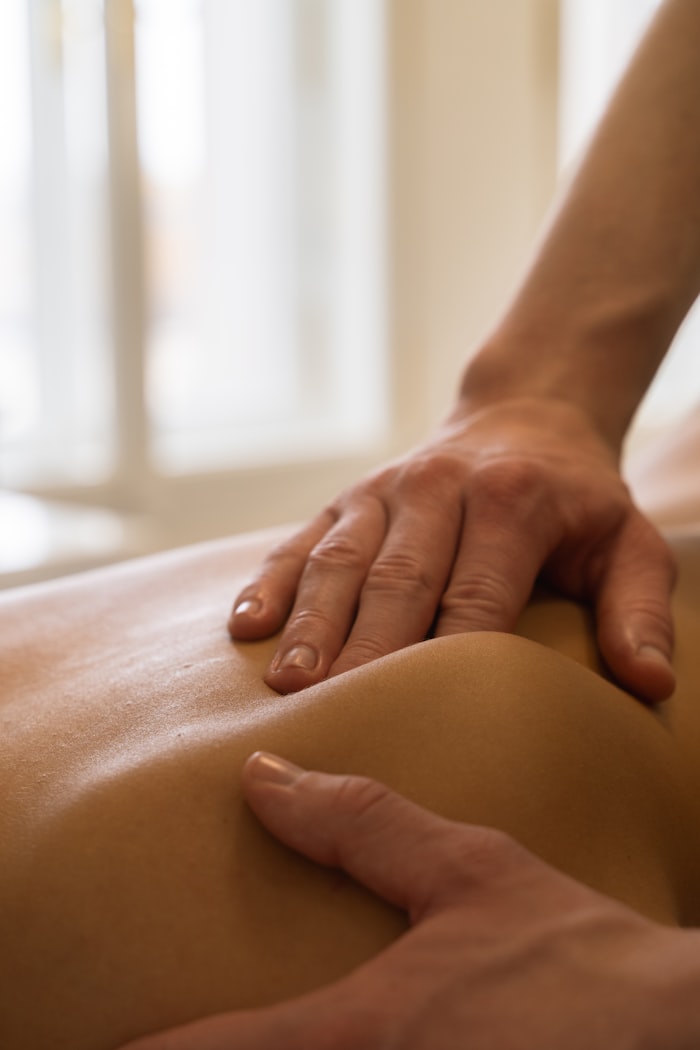
The kneading and gliding strokes used in a full body massage physically encourage blood flow through compressed and tense muscle tissue. Better circulation means oxygen and nutrients reach your muscles more efficiently, which speeds up recovery from both exercise and everyday physical strain.
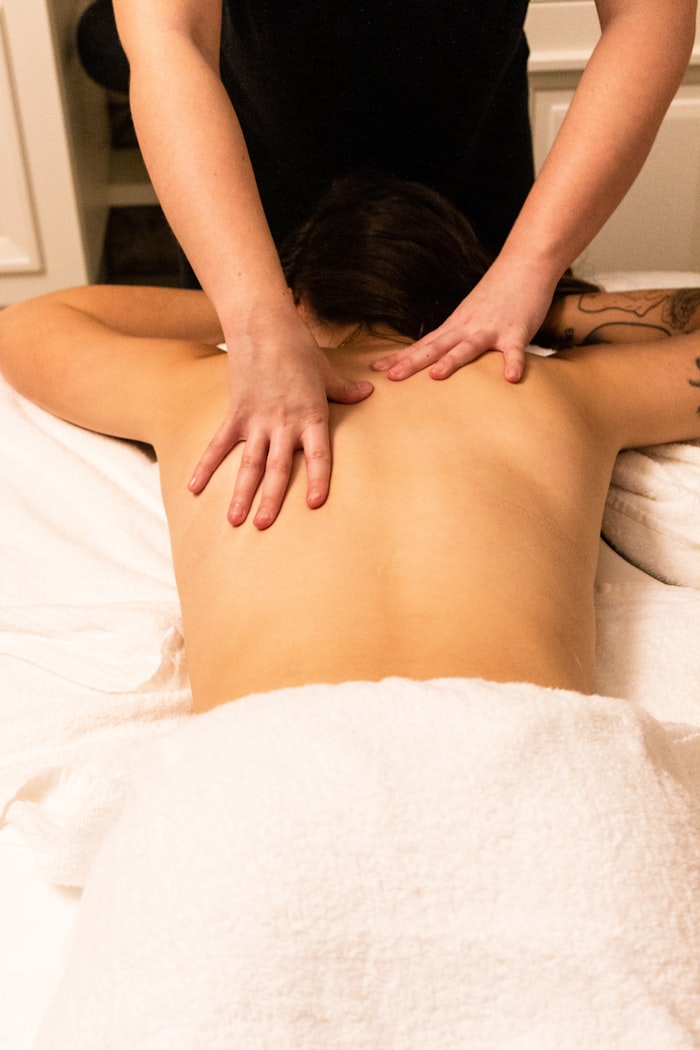
Sitting at a desk for eight-plus hours a day causes muscles, particularly around the neck, shoulders, and lower back, to remain in a constant low-grade contraction. A full body massage physically breaks this pattern, releasing tightness that stretching alone often cannot fully resolve.
Touch therapy has a measurable effect on stress hormones. Sessions that include slow, rhythmic strokes — as in our Swedish and full body treatments — are associated with reduced cortisol levels and increased serotonin and dopamine, the neurotransmitters most closely tied to mood stability.
Many clients report deeper, more restful sleep in the days following a full body massage. This is partly a downstream effect of lower stress hormones and partly the result of physical relaxation carrying over into the evening.
A significant number of tension headaches originate in tight neck and shoulder muscles rather than the head itself. A full body massage that includes focused work on the upper back and neck can meaningfully reduce headache frequency for clients whose triggers are muscular.
As tight muscles release, many clients naturally notice — and correct — postural habits they were previously unaware of, such as rounded shoulders or a forward-leaning neck position common among screen-heavy professionals in DHA and Clifton.
For clients who train regularly, a full body massage supports faster clearance of metabolic waste from muscle tissue, which can reduce the intensity and duration of post-workout soreness.
Beyond the physical effects, dedicating 60 to 90 uninterrupted minutes to a full body massage gives the mind a rare break from constant input — phones, meetings, and decision-making — which many clients describe as being as valuable as the physical relief itself.
While not a substitute for medical treatment, regular full body massage is frequently used alongside other care to manage chronic conditions involving muscular pain, offering a non-pharmacological complement to a broader treatment plan.
Unlike many wellness trends, massage therapy has a long, consistent track record and no significant downside when performed by trained therapists. Booking a full body massage every two to four weeks is a realistic, sustainable habit for most working professionals in Karachi.
The clients who benefit most from full body massage are rarely the ones who book a single session and stop — they are the ones who treat it as a recurring part of managing their physical and mental workload, in the same category as exercise or sleep. If you have been putting off your first session, consider this your sign to book one this week.

DHA Karachi has no shortage of businesses advertising themselves as a "massage center" or "spa," but the quality, hygiene, and professionalism behind that label vary enormously. If you are searching for the best massage center in DHA Karachi, here is a practical checklist to help you evaluate your options before booking — whether that's Nirva or anywhere else.
A genuine wellness spa should be able to speak clearly about its therapists' training background. Vague answers or an unwillingness to discuss qualifications is a warning sign.
The best massage centers in DHA Karachi operate from private, purpose-designed rooms — not shared or repurposed spaces. Privacy and a calm, controlled environment are core to an effective session, not a luxury add-on.
Reputable spas confirm pricing before your session begins, with no ambiguity about what is included. If pricing feels evasive or is only revealed after you arrive, treat that as a red flag.
Fresh linens, sanitised equipment, and visibly clean treatment rooms should be non-negotiable. Ask directly about hygiene practices if this is not obvious on arrival.
Centers that clearly differentiate between deep tissue, Swedish, Thai, and other techniques — rather than offering one generic "massage" — typically indicate a more professionally trained team, since each technique requires distinct skills.
A center that responds quickly and clearly on WhatsApp or by phone, and confirms appointment details without back-and-forth confusion, generally reflects a well-run operation overall.
Look for reviews that describe specifics — a particular treatment, a specific concern that was addressed — rather than generic five-star ratings with no detail.
Given Karachi's traffic patterns, a center centrally located within DHA offers a meaningful advantage for regular clients from Clifton, PECHS, and Gulshan who want a sustainable, recurring wellness routine without a long commute.
Nirva Massage Center Karachi was built directly around this checklist — trained therapists, private rooms, transparent pricing, and a full, clearly defined service menu, all within a convenient DHA Karachi location. If you are comparing your options, we would simply ask that you hold us to the same standard.
Stress is rarely just a mental experience — it shows up physically, in tight shoulders, shallow breathing, clenched jaws, and a nervous system stuck in a low-grade state of alert. Understanding how massage interrupts this cycle explains why it remains one of the most effective non-medical tools for stress management available in Karachi today.
The human nervous system operates in two broad modes: the sympathetic "fight or flight" state, and the parasympathetic "rest and digest" state. Chronic stress keeps many professionals locked in the former, even when there is no immediate threat. Slow, sustained touch — the foundation of Swedish and full body massage — directly signals the parasympathetic system to activate, shifting the body toward genuine rest.
Cortisol, the body's primary stress hormone, tends to stay elevated during periods of prolonged mental pressure — deadlines, financial decisions, or demanding management responsibilities. Studies on massage therapy consistently associate treatment sessions with reduced cortisol levels, offering a measurable, physiological explanation for why clients feel calmer afterward, not just a placebo effect.
Tense muscles and psychological stress reinforce each other: stress causes muscular tension, and that tension sends signals back to the brain that keep the stress response active. Massage interrupts this loop at the physical end, releasing tension directly and allowing the mental state to follow.
Combining massage with essential oils — as in our aromatherapy treatment — adds a second calming pathway through scent, which connects directly to the brain's limbic system, the region most closely tied to emotional regulation.
For executives, business owners, and corporate employees managing constant deadlines across DHA and Clifton, this is not an abstract wellness concept — it is a practical tool. A recurring massage schedule, even once every three to four weeks, gives the nervous system regular, structured opportunities to reset, rather than remaining stuck in a permanent state of tension.
The most effective approach is not waiting until stress becomes overwhelming, but treating massage as preventative maintenance — in the same way regular exercise prevents physical decline rather than only treating existing injury.
Karachi's corporate and business community runs on long hours — early meetings, late calls with international clients, and desk-bound days that leave little room for physical movement. Regular massage therapy is one of the few interventions specifically suited to counteracting the physical cost of this lifestyle.
Extended sitting shortens the hip flexors, rounds the shoulders, and places sustained strain on the lower back and neck. Over months and years, this can develop into chronic tightness that occasional stretching rarely resolves on its own.
Executives and business owners face a different kind of strain: near-constant decision-making. This mental load has a physical signature too — tight jaws, shallow breathing, and tension headaches are common among high-responsibility professionals, even those who are not physically active during the day.
A single massage session provides real, immediate relief — but the underlying patterns that caused the tension (posture, workload, stress) return within days without a structural change. This is why we recommend a recurring schedule, typically every two to four weeks, for clients whose work involves sustained physical or mental strain.
Different professional demands call for different treatments. Desk-based roles with lower back tightness often benefit most from deep tissue massage, while high-stress decision-making roles frequently respond better to Swedish or aromatherapy massage focused on nervous system regulation. A quick head and shoulder session can also be scheduled during a lunch break for targeted, time-efficient relief.
Beyond personal comfort, unmanaged physical tension and stress have a documented impact on focus, decision quality, and long-term health outcomes. Treating massage as part of a professional maintenance routine — alongside sleep and exercise — is a practical, evidence-aligned investment rather than an indulgence.
If you have never built massage into your routine, start with a single session and pay attention to how your body and focus respond over the following days. Most clients who commit to a recurring schedule do so after noticing that difference firsthand.
Deep tissue massage is often requested by name, but many clients booking it for the first time are unsure exactly what makes it different from a standard full body massage, or whether it's the right choice for their specific tension. Here is a clear breakdown of what deep tissue massage actually does, and who benefits most from it.
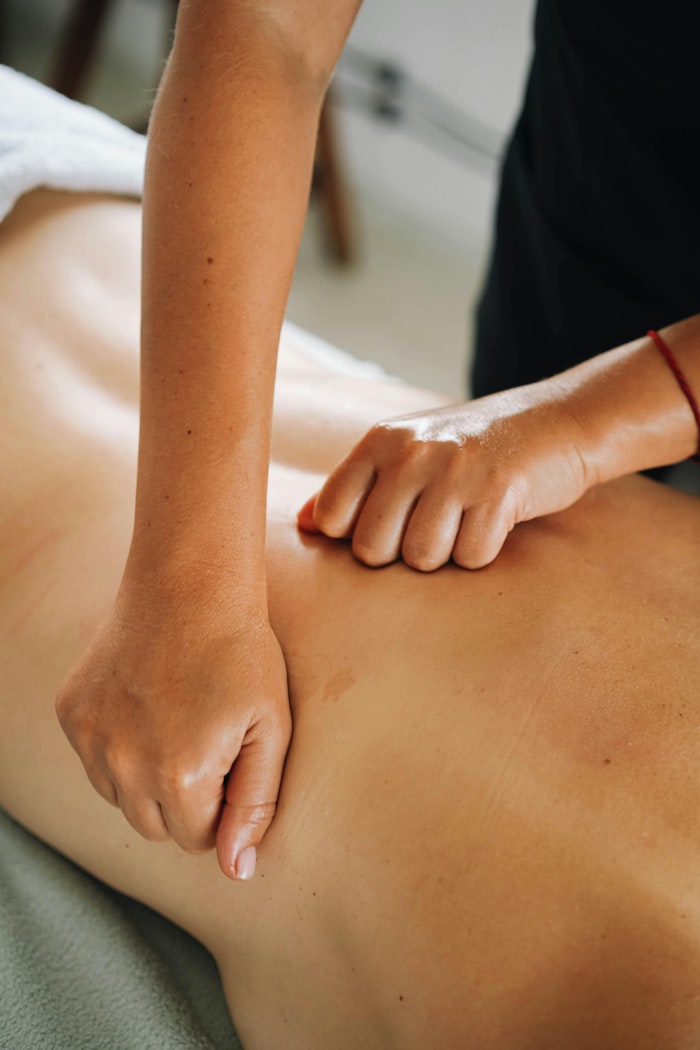
Unlike a Swedish massage, which primarily works the surface layers of muscle with lighter pressure, deep tissue massage uses slow, firm strokes that reach the deeper muscle layers and the connective tissue (fascia) surrounding them. This is where chronic knots and adhesions typically form.
Deep tissue massage is particularly effective for gym enthusiasts managing recurring soreness, professionals with chronic lower back or shoulder tightness from desk work, and anyone recovering from an old injury that has left lingering stiffness in the surrounding muscles.
"Deep" does not mean "painful." A skilled therapist applies firm, sustained pressure that reaches the target muscle layer without causing the client to tense up defensively — which would actually work against the treatment's goal. At Nirva, therapists check in throughout the session to keep pressure within an effective, comfortable range.
During the session, you may feel focused, sometimes intense pressure in specific tight areas. It's common to feel some tenderness in the treated muscles for a day afterward, similar to the feeling after a strong workout — this typically resolves within 24 to 48 hours and is a normal part of the muscle's release process.
For chronic tension, we typically recommend deep tissue massage every two to three weeks initially, tapering to a maintenance schedule of once a month as tightness improves. A single session can help, but lasting change usually requires a short series of treatments.
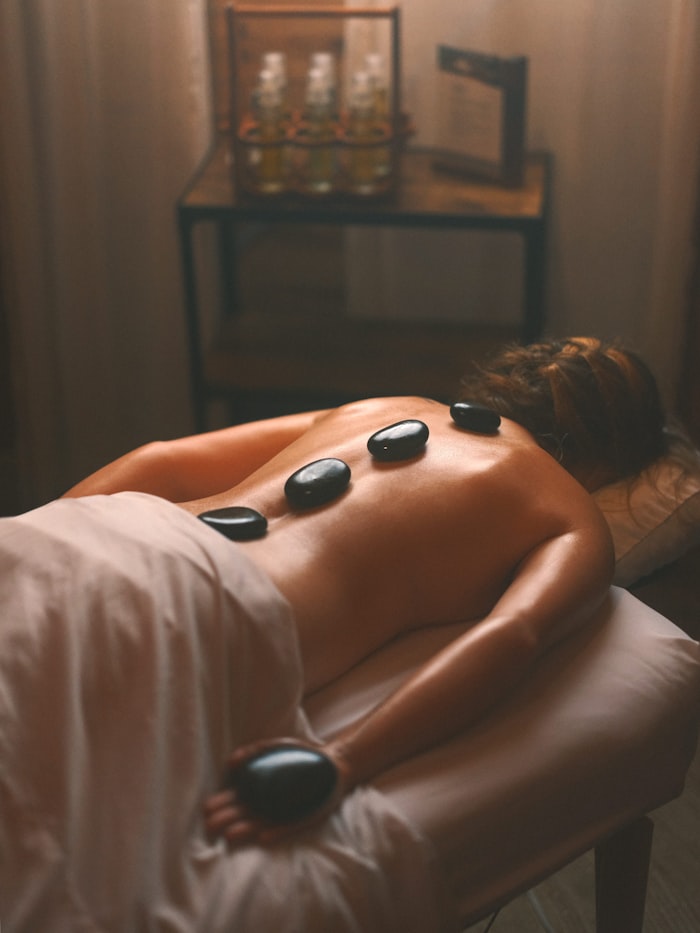
Some clients pair a deep tissue session with hot stone therapy, using the heat to soften muscle tissue before firmer pressure work — a combination that can make the treatment more comfortable while still reaching deep tension effectively.
If your tension is chronic, localized, and has not fully responded to lighter massage or stretching, deep tissue is likely the right next step. If you are newer to massage or primarily seeking relaxation rather than targeted pain relief, starting with a Swedish massage may be a more comfortable entry point.
Monthly guidance on stress relief, recovery, and massage — no spam, unsubscribe anytime.